Summary
- Hungary → Japan
- $1.2billion
- Japan → Hungary
- $1.5billion
- Hungary’s balance
- -$323million
Balance
Hungary’s trade balance with Japan
Trade between Hungary and Japan grew 5.4-fold since 1995
USD billions (current). Hungary’s exports and imports; bars: its balance (green surplus, red deficit).
- Exports 1.2
- Imports 1.5
- Balance -0.3
Source: CEPII BACI
Show the numbers
| Year | Exports | Imports | Trade balance |
|---|---|---|---|
| 1995 | $130 million | $364 million | -$235 million |
| 1996 | $165 million | $395 million | -$230 million |
| 1997 | $271 million | $701 million | -$430 million |
| 1998 | $288 million | $970 million | -$682 million |
| 1999 | $279 million | $1.1 billion | -$850 million |
| 2000 | $417 million | $1.6 billion | -$1.2 billion |
| 2001 | $409 million | $1.5 billion | -$1.1 billion |
| 2002 | $408 million | $1.5 billion | -$1.1 billion |
| 2003 | $462 million | $2 billion | -$1.5 billion |
| 2004 | $524 million | $1.8 billion | -$1.3 billion |
| 2005 | $535 million | $2.2 billion | -$1.7 billion |
| 2006 | $568 million | $2.1 billion | -$1.5 billion |
| 2007 | $609 million | $2.6 billion | -$2 billion |
| 2008 | $706 million | $2.5 billion | -$1.8 billion |
| 2009 | $640 million | $2 billion | -$1.3 billion |
| 2010 | $801 million | $1.9 billion | -$1.1 billion |
| 2011 | $832 million | $1.5 billion | -$710 million |
| 2012 | $822 million | $1.2 billion | -$391 million |
| 2013 | $704 million | $1.2 billion | -$529 million |
| 2014 | $980 million | $1.3 billion | -$285 million |
| 2015 | $1.2 billion | $1.3 billion | -$85 million |
| 2016 | $1.2 billion | $1.4 billion | -$197 million |
| 2017 | $1.1 billion | $1.4 billion | -$324 million |
| 2018 | $1 billion | $1.5 billion | -$488 million |
| 2019 | $882 million | $1.6 billion | -$713 million |
| 2020 | $1 billion | $1.3 billion | -$295 million |
| 2021 | $1.1 billion | $1.6 billion | -$518 million |
| 2022 | $1.1 billion | $1.5 billion | -$322 million |
| 2023 | $1.2 billion | $1.8 billion | -$643 million |
| 2024 | $1.2 billion | $1.5 billion | -$323 million |
What they sell each other
What Hungary sells to Japan
The top 10 headings in 2024, with their share of the total.
What Japan sells to Hungary
The top 10 headings in 2024, with their share of the total.
How it travels
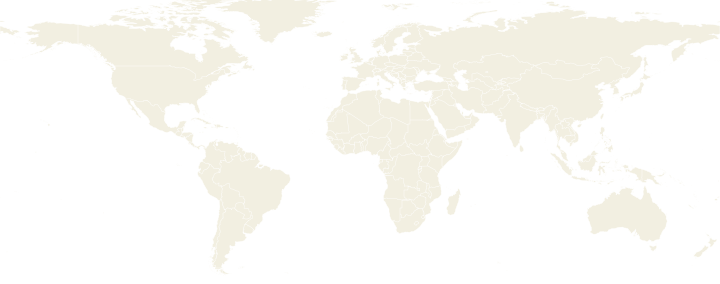
The estimated sea route between Rijeka (Croatia) and Yokohama is 15,511 nautical miles (28,726 km) long: ≈ 36–46 days at sea (at 18 and 14 knots).
Because of the 2024 disruptions, traffic is split: 85% via the Strait of Gibraltar, the Cape of Good Hope and the Strait of Malacca and Singapore (15,511 nautical miles); and 15% via the Suez Canal, the Bab-el-Mandeb Strait and the Strait of Malacca and Singapore (9,372 nautical miles).
Hungary is landlocked: it ships through Rijeka (Croatia).
Sailing estimate without port calls, waiting or transshipment; not a schedule. One main reference port per country: in large countries it does not represent all of its ports.
Split by transport mode
Mode estimated from value per kilo and geography; both directions together.
How much each matters to the other
Japan was Hungary’s 22nd largest trading partner (0.9% of its trade), and Hungary was Japan’s 48th (0.2%).
- Japan in Hungary’s trade
- 0.9%
- Japan’s rank among Hungary’s partners
- 22nd
- Hungary in Japan’s trade
- 0.2%
- Hungary’s rank among Japan’s partners
- 48th
Compare with
Other partners of Hungary
Other partners of Japan
Sources and methodology
Sources and licenses
- CEPII BACI · Licence Ouverte Etalab 2.0
- World Bank, Global Shipping Traffic Density · CC BY 4.0 (route network derived by this site)
- World Port Index (NGA) · Public domain (US Government work)
- Natural Earth · Public domain
Methodology
Goods trade from CEPII BACI (BACI_HS92_V202601), in current US dollars, with exports and imports reconciled between countries. The transport mode is our own estimate based on value per kilo and geography. The sea route comes from our own network derived from World Bank shipping density (not from nautical charts), between one main reference port per country (World Port Index); days are the distance at 14 and 18 knots, without port calls or waiting. Data up to 2024.